Description
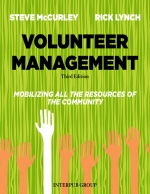
The definitive “textbook” on volunteer management is now bigger and better. Steve and Rick have written over 150 additional pages of information in this new, third edition. It remains a thorough examination of every facet of a successful volunteer program, from planning and organizing through measuring effectiveness. It includes:
- 418 pages overall of updated basic material on every aspect of managing volunteers, with 150 pages of totally new material
- Data and program examples from more than 15 countries
- Special emphasis on making use of the Internet in recruitment and volunteer management
- A new chapter on "Special Topics in Volunteer Management" covering involvement of pro-bono volunteers, dealing with less-effective volunteers, helping volunteers improve their employability, and ethical issues in managing volunteers
- 55 pages of samples forms and organizational policies related to volunteers
- Sample forms and worksheets for daily work with volunteers
- List of Internet resources
And, for the first time in print, the complete "McCurley's Rules of Volunteer Engagement" — volunteer management for really smart people in 25 pithy statements!
Volunteer Management is not a book about managing “a program”; instead it focuses on connecting volunteers with an organization and on those unique aspects of working effectively with staff who do not receive monetary compensation.
Volunteer Management is designed to provide the new and the experienced volunteer program manager with both basic knowledge and state-of-the-art information, based on the more than 50 years of experience the authors have acquired in their work with thousands of volunteer programs.
Table of Contents
View the table of contents
Readers' Reviews
We're always interested in receiving readers' reviews.
When you've completed the book, remember to
submit a review!
Brief Excerpt
Providing Ongoing Evaluation and Feedback
Volunteer Program Managers do not commonly look forward to the prospect of conducting an evaluation of a volunteer with great enthusiasm.
Staff who work with volunteers may be even less enthusiastic. Many volunteer programs, in truth, cannot even claim to have a process for volunteer evaluation, except in a very loose sense. Evaluation, however, is not something to be avoided, especially if you realize that it can be a positive management device.
Why Evaluate Volunteers?
Rather than dreading the prospect of evaluation, the smart Volunteer Program Manager should realize two important facts:
Most volunteers want to do the best job they can.
The absence of feedback and assistance is bothdemeaning and disturbing to them.
Most volunteers will “win” in assessment situations.
Failing to evaluate a volunteer sends a clear messagethat you don’t care about the quality of the work,and that you don’t care much about the volunteer.Both volunteers who know they aren’t doing welland those who think they should be congratulatedfor good work will think less of the volunteer effort,and of you, if evaluations are not conducted.
There are two basic reasons for conducting volunteer evaluations:
1. To help the volunteers work closer to her/his potential.
2. To help the organization
Concerned about whether you can
view an electronic book?
Viewing
the table of contents linked above is a good test to see if you
can easily view electronic books. If you can successfully click
on the link and open the table of contents, you should have no
problem viewing the book. If you have problems, you probably need
to install or upgrade Acrobat Reader. Click on the graphic below
to download the latest version from the Adobe website. It is an
easy download. They also have a support area if you continue to
have problems with viewing.